Galaxy Hints at Trillion-Dollar Hyperscaler Behind Helios AI Buildout

Galaxy Digital said the end user of computing capacity at its Helios AI data center campus in Texas will be a “multi-trillion dollar investment-grade public company,” offering a rare glimpse into who may ultimately be consuming the AI computing facility converted from bitcoin mining.
The disclosure, made on the company’s first-quarter earnings call, shifts attention beyond the buildout itself to the demand side of the equation — and to the small group of technology giants capable of absorbing hundreds of megawatts of GPU capacity.
Galaxy, which has leased the Helios facility to CoreWeave (NASDAQ: CRWV), did not name the end customer. But executives said CoreWeave has indicated that the GPUs deployed in the first phase of the site will serve a company with both a multi-trillion-dollar market capitalization and investment-grade credit — a combination that effectively narrows the field to a handful of U.S. hyperscalers.
The profile aligns with companies at the center of the current AI infrastructure race, where demand for compute is increasingly being secured through a web of partnerships rather than owned outright.

Among them is Microsoft, which has emerged as a key counterparty across the AI stack. The company maintains a deep relationship with OpenAI and recently updated that partnership to emphasize the need to scale “gigawatts of new data center capacity,” while continuing to anchor OpenAI’s workloads on its Azure cloud.
While Galaxy did not draw a direct connection, the scale of Helios — and the structure of the CoreWeave lease — fits within a broader pattern of hyperscalers tapping third-party developers to secure incremental capacity amid tightening power constraints.
Under that model, Galaxy provides the powered shell, CoreWeave installs and operates GPU clusters, and the end customer contracts for the compute — effectively creating a layered supply chain for AI infrastructure.
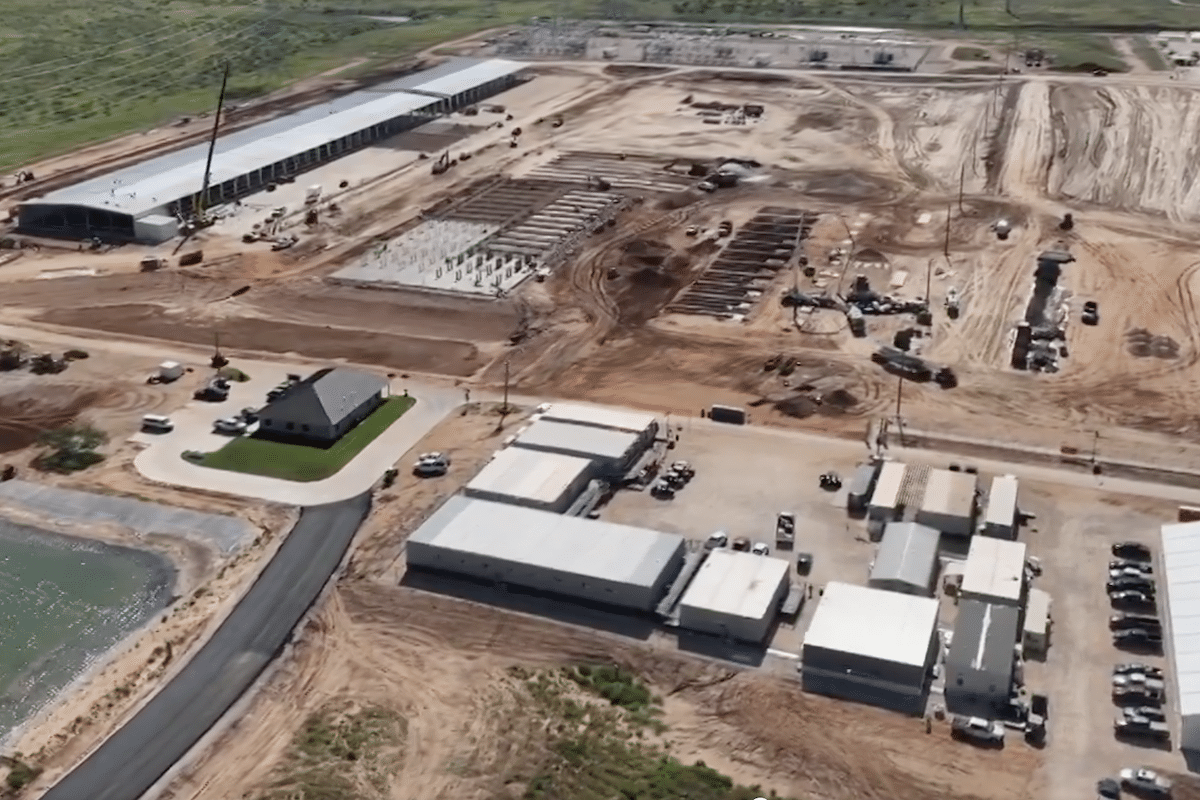
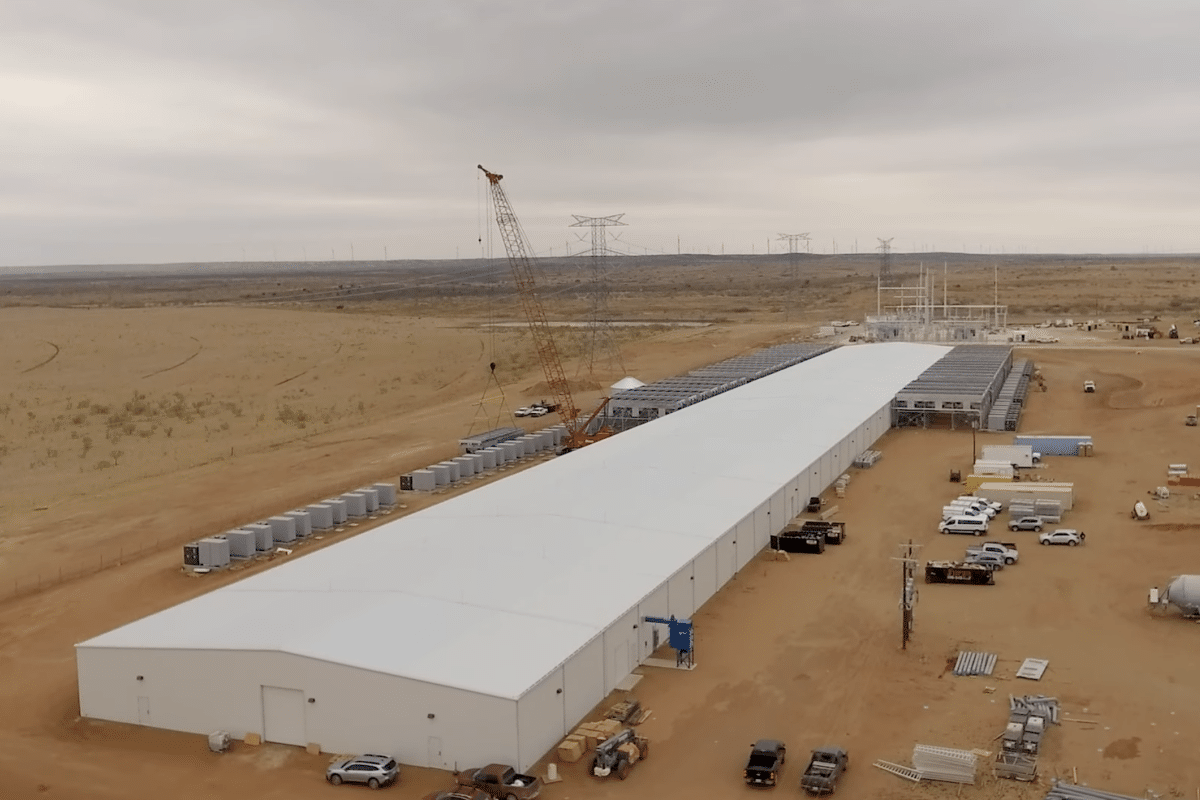
Executives said Helios has already transitioned from a legacy bitcoin mining site into a fully operational HPC data center, with the first data hall delivered and additional capacity expected to come online through the second quarter. The initial phase totals 133 megawatts, with CoreWeave typically requiring several months after delivery to complete the final buildout for customer use.
The project is underpinned by a 15-year lease that Galaxy says will generate stable, contracted revenue with margins approaching 90%, marking a sharp departure from the volatility of its digital asset business.
Still, the identity of the end user remains a focal point for investors. With only a limited number of companies matching the description provided, Helios could offer an early signal of how — and where — the largest AI players are sourcing the next wave of compute capacity.
For now, Galaxy is leaving that question unanswered. But the combination of scale, credit profile and timing suggests the Helios campus is not just a test case for mining-to-AI conversion — it may also be a window into the evolving procurement strategies of the world’s most powerful technology firms.