Crusoe Plans $1B Texas AI Data Center Expansion, Pursues Nuclear Power

Crusoe plans to add two data-center buildings costing an estimated $1 billion at its Goodnight campus in the Texas Panhandle, as the privately held AI infrastructure provider separately pursues small nuclear reactors to power future computing facilities.
The two single-story buildings near Claude, Texas, will each span about 805,000 square feet and contain multiple data halls, according to architectural-barriers filings submitted to the Texas Department of Licensing and Regulation. The filings identify Crusoe affiliate GN DC1 LLC as the owner.

Construction on Building 3 began May 25 and is scheduled for completion Aug. 1, while work on Building 4 started June 15 and is due to finish in March 2027, the state records show. Each carries an estimated construction cost of $500 million. Such estimates and completion dates can change as projects advance.
The filings, first reported by Data Center Dynamics, extend a campus that is expected to comprise at least six buildings. Earlier state records list two roughly 485,000-square-foot facilities and two other 805,000-square-foot buildings at the same address.
An Armstrong County tax-abatement agreement says the first phase may contain four buildings consuming as much as 530 megawatts, with four 25-megawatt data halls planned for each building. Google has separately said it is developing a data-center campus in Armstrong County as part of a $40 billion investment in Texas cloud and AI infrastructure through 2027. Research firm Cleanview has said Google confirmed that it is working with Crusoe on the Goodnight development.
The latest state filings do not identify a tenant.
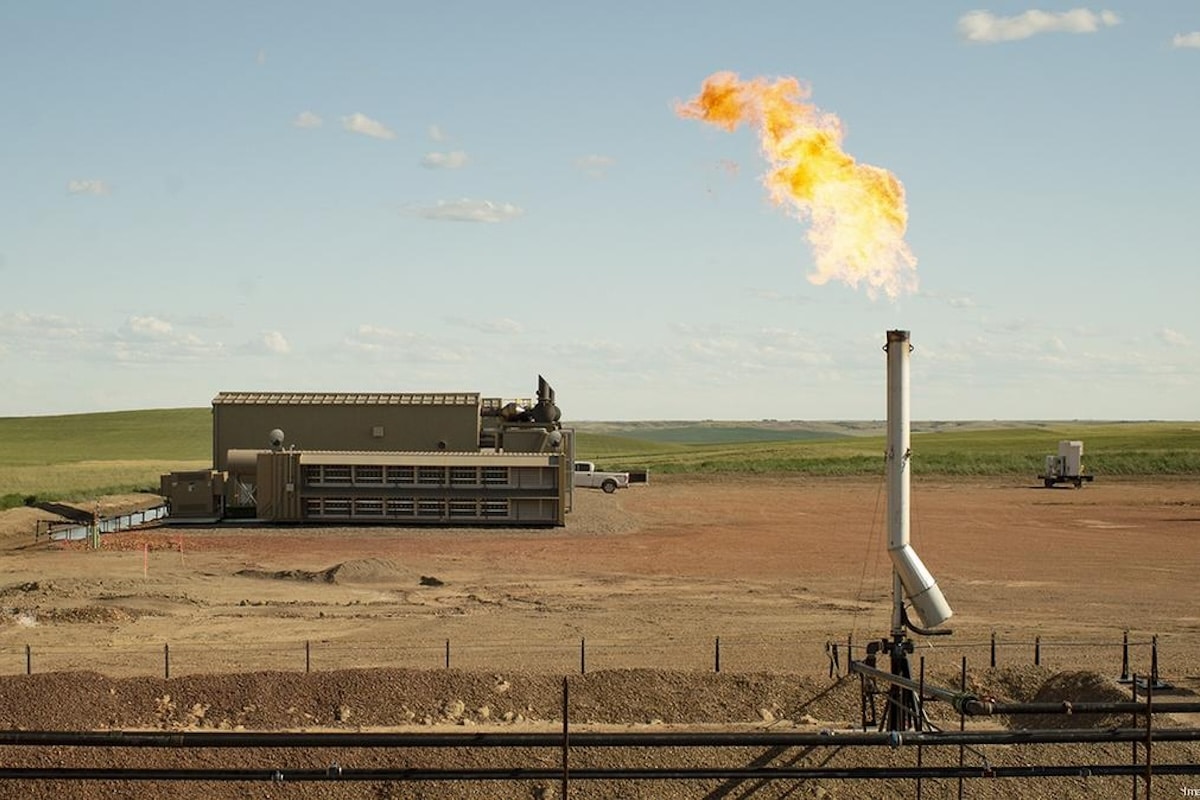
The Texas expansion underscores the scale of Crusoe’s near-term power requirements. The company has applied to the Texas Commission on Environmental Quality for permits covering the Goodnight site, including greenhouse-gas and other air emissions. The state’s public notice says the proposed facility would generate electricity and emit nitrogen oxides, carbon monoxide, particulate matter and greenhouse gases.
Against that backdrop, Crusoe on Thursday announced a partnership with Aalo Atomics aimed at eventually supplying some of its data centers with modular nuclear plants.
The companies plan to begin with a Crusoe Spark modular data center running Crusoe’s cloud service at Idaho National Laboratory in 2027. It would be powered by Aalo’s first electricity-generating reactor as a proof of concept, according to Crusoe’s announcement.
Crusoe and Aalo then intend to install 50-megawatt Aalo Pod plants at Crusoe data centers by the end of 2029. Neither company disclosed financial terms, firm purchase commitments, proposed commercial sites or customers. They also did not say the reactors would be used at Goodnight.
Aalo’s standard Pod design calls for five 10-megawatt sodium-cooled reactors sharing power-generation equipment. The Austin-based company says factory-built modules would allow operators to add capacity in increments as data-center demand grows.
Aalo reached a preliminary technical milestone in early July when its test reactor achieved zero-power criticality at Idaho National Laboratory. That means it sustained a controlled nuclear chain reaction, but it did not generate commercial electricity.
The Department of Energy said Aalo was the fourth advanced-reactor developer in its pilot program to reach criticality by the July 4 deadline. Aalo is now working on a separate 10-megawatt reactor intended to generate electricity and supply the Crusoe modular data center in 2027.
Reaching criticality reduces some technical risk but is not equivalent to receiving approval for commercial deployment. Aalo remains in pre-application discussions with the Nuclear Regulatory Commission for its Idaho nuclear project, according to the agency’s project page.