
Aschenbrenner’s $24B AI Hedge Fund Unwinds Trades After Losses: Report
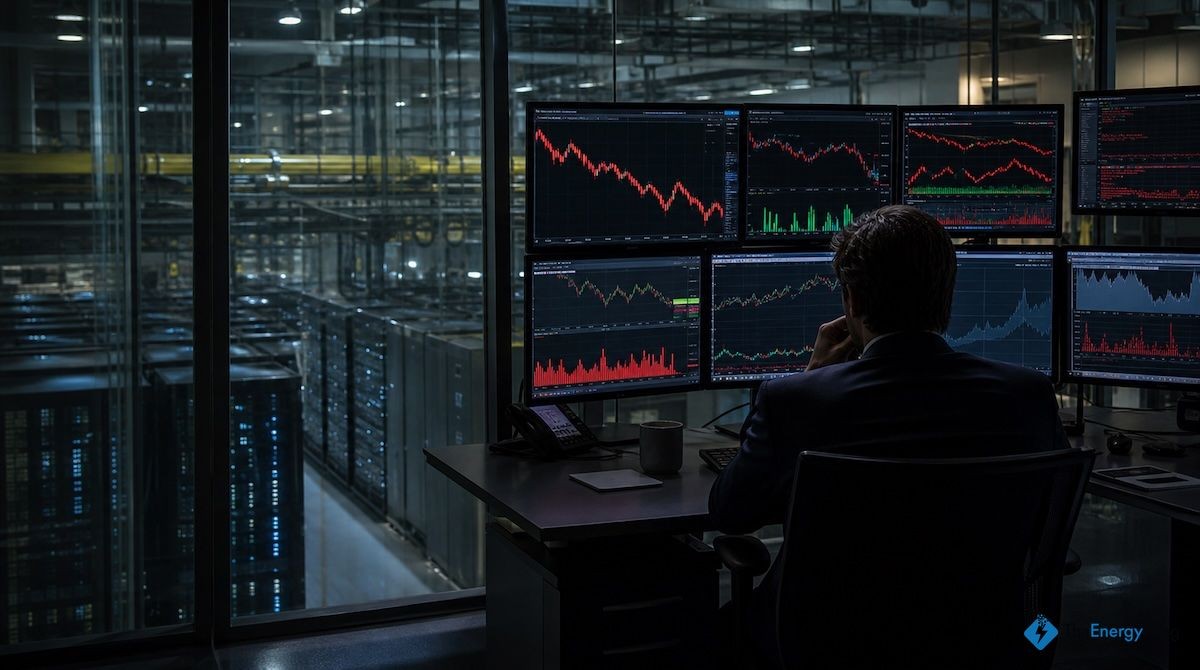
AI-generated image: synthetic visual, not an actual depiction of events, people, or locations.
Leopold Aschenbrenner’s Situational Awareness is unwinding trades and may be forced to sell assets after suffering steep losses on artificial-intelligence investments and bets against software companies, CNBC reported, adding to signs of mounting liquidity pressure at the once-soaring hedge fund.
The firm, which CNBC described as managing about $24 billion, was hurt by declines in AI infrastructure holdings including South Korean memory-chip maker SK Hynix. Short positions in software companies such as Adobe also moved against it, according to people familiar with the matter cited by CNBC.
Situational Awareness has begun reducing positions and could face further liquidations, the report said. The firm has also marketed stakes in privately held companies, including AI developer Anthropic, as it seeks to raise cash. The scale of its losses, how much capital it needs and which assets have already been sold remain unclear.
The firm did not respond to CNBC’s request for comment.

The report provides a more serious assessment of the fund’s position than an earlier Financial Times report, which said Situational Awareness had approached existing investors and lenders for additional capital after July’s technology selloff. The FT also reported that some limited partners had been offered opportunities to buy assets from the portfolio.
One person cited by the FT characterized that outreach as ad hoc rather than a coordinated fundraising round. Situational Awareness had gained 439% through June, according to the newspaper, helped by leverage supplied through several large prime brokers.
Aschenbrenner acknowledged the market reversal in a July 24 investor letter but argued that lower valuations had produced the most attractive entry point for AI investments since early 2025, the FT reported. Existing investors were given until Aug. 1 to add capital, while the letter identified a potential Anthropic initial public offering as a possible catalyst later in the year.
The disclosures came as several stocks associated with the fund’s AI infrastructure strategy rebounded sharply Thursday. As of 10:50 a.m. in New York, IREN was up 26%, Core Scientific (NASDAQ: CORZ) had gained almost 21% and Riot Platforms (NASDAQ: RIOT) was 20% higher. Applied Digital, CleanSpark (NASDAQ: CLSK), TeraWulf (NASDAQ: WULF) and Hut 8 (NASDAQ: HUT) also posted double-digit advances.
Those gains followed heavy selling on Wednesday and do not establish that Situational Awareness recovered its losses. Its current holdings, the prices at which positions may have been reduced and the effect of any private-asset sales have not been disclosed.
The broader market also recovered part of its recent decline. The S&P 500 rose 0.9% in early trading Thursday and the Nasdaq Composite gained 1.8%, helped by stronger-than-expected results from Microsoft and a rebound in semiconductor shares. Micron Technology climbed 8.4%, while Advanced Micro Devices advanced 7.3%.
Asia had been at the center of the rout. On July 28, SK Hynix fell 14.7% in Seoul and Samsung Electronics lost 13.4%, helping drive the Kospi down 10.8% in its biggest one-day decline since March, Reuters reported. Investors were reassessing high AI-related valuations amid concerns about infrastructure financing and growing competition from China.
The losses represent a sharp test for a fund that became one of the most closely followed investors in the AI trade less than two years after its launch.
Aschenbrenner, a former OpenAI researcher, founded Situational Awareness in late 2024 after publishing an essay series that forecast rapid advances toward increasingly powerful AI systems. His investment strategy focused on the physical constraints surrounding that expansion, including memory chips, electricity generation, data centers and specialized cloud-computing capacity.


