The two businesses, however, remain at different stages of monetization. While mining production continues to rise, most of the company's anticipated AI Cloud revenue is tied to facilities and customer deployments scheduled for future quarters.
Bitcoin Production Triples as Mining Capacity Expands
Bitdeer's self-mining hashrate reached 82.3 exahashes per second (EH/s) at the end of September, up from 79.9 EH/s in August and 35 EH/s a year earlier.
The company's co-mining hashrate, representing Bitdeer-owned mining equipment operated in third-party data centers, increased to 28.7 EH/s from 21.6 EH/s in August.
Combined, the two active mining categories represented approximately 111 EH/s at month-end.
Bitdeer separately reported 86.4 EH/s of total proprietary hashrate, a measure encompassing its self-mining fleet and certain other proprietary mining capacity, including equipment not currently deployed or operating.
The continued expansion builds on the trajectory TheEnergyMag documented in July, when Bitdeer produced a then-record 1,190 BTC and its estimated share of global bitcoin block rewards approached 9%.
Production has since increased further, reaching 1,310 BTC in August and 1,355 BTC in September.
Despite mining 1,355 BTC during the latest month, Bitdeer reported holding just 47 BTC at September 30, down from 61 BTC at the end of August and 2,029 BTC a year earlier.
The relatively small balance underscores the distinction between Bitdeer's expanding bitcoin production and a strategy centered on accumulating mined coins. The monthly update does not provide a reconciliation of bitcoin sales, transfers and other changes in holdings.
The production figures also do not establish the profitability of mining operations. Electricity expenses, equipment depreciation, network difficulty and bitcoin prices remain critical determinants of mining margins.
AI Cloud Backlog Jumps to $2.9 Billion, but ARR Remains Flat
The more significant change in Bitdeer's AI business came from customer contracting rather than expansion of its currently deployed GPU fleet.
The company reported approximately $2.9 billion in AI Cloud revenue backlog at September 30, compared with $900 million at the end of August.
The increase largely reflects previously announced offtake commitments covering more than 70% of Bitdeer's approximately 21.7 MW A201 data center in Johor Bahru, Malaysia.
Those commitments represent more than $1.7 billion in expected revenue over five years.
Bitdeer had announced the A201 agreements in late September, following an earlier deal covering the entire 9.5 MW A102 facility at Cyberjaya, representing more than $800 million in expected revenue.
The September operations report confirms the impact of those agreements on the company's reported backlog.
However, the operating metrics of its existing GPU cloud business showed comparatively little change.
Bitdeer had 4,328 GPUs deployed at the end of September, unchanged from August. The number under external subscription increased marginally to 4,007 from 3,998, while overall GPU utilization improved to 95% from 92%.
Annualized recurring revenue remained approximately $86 million.
Bitdeer calculates this ARR figure by annualizing daily revenue from contractually obligated GPU orders at month-end. It is distinct from the multiyear revenue backlog associated with future customer deployments.
The divergence illustrates the commercial transition underway: Bitdeer has secured substantially more future AI Cloud business, but much of that contracted capacity has yet to enter service and contribute to operating revenue.
AI Cloud Capacity Reaches 333.5 MW Across Three Countries
Bitdeer also reiterated its rapidly expanding AI Cloud infrastructure portfolio, now totaling 333.5 MW of secured critical IT capacity across Malaysia, Norway and the United States.
The figure incorporates two recently announced Malaysian projects totaling 127 MW.
A901, a new 67 MW campus designed for NVIDIA GB300 systems, is scheduled for full capacity delivery in the second quarter of 2027.
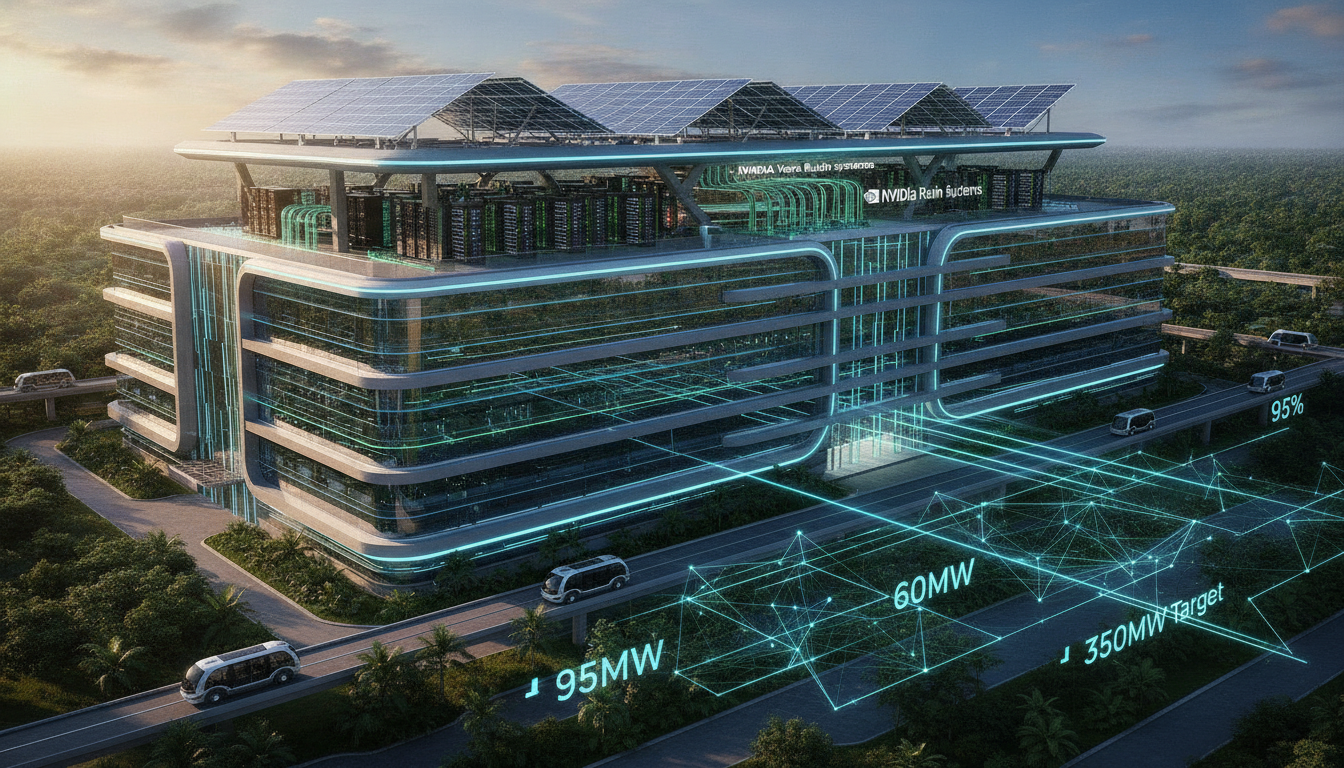
A103, a 60 MW expansion at Bitdeer's Cyberjaya campus, is designed for NVIDIA Vera Rubin systems and is expected to be energized in the first quarter of 2028.
Together, the projects bring Bitdeer to approximately 95% of its target of securing up to 350 MW of AI Cloud capacity by early 2028.
The total represents infrastructure owned or covered by executed data center services agreements, rather than capacity already operating or generating revenue.
At A201, Bitdeer said it had procured more than 100 NVIDIA GB300 NVL72 racks ahead of energization. Full deployment and go-live are targeted for April 2027.
Separately, Bitdeer highlighted its collaboration with NVIDIA on the Open Agent Safety Platform, which combines software-based controls and hardware-supported monitoring intended to improve security for autonomous enterprise AI agents.
The collaboration reflects Bitdeer's ambition to offer a broader range of AI infrastructure and software services rather than simply leasing GPU computing capacity.
Rockdale and Norway Anchor Colocation Strategy
Alongside its GPU cloud business, Bitdeer continues to develop a separate AI and high-performance computing colocation portfolio.
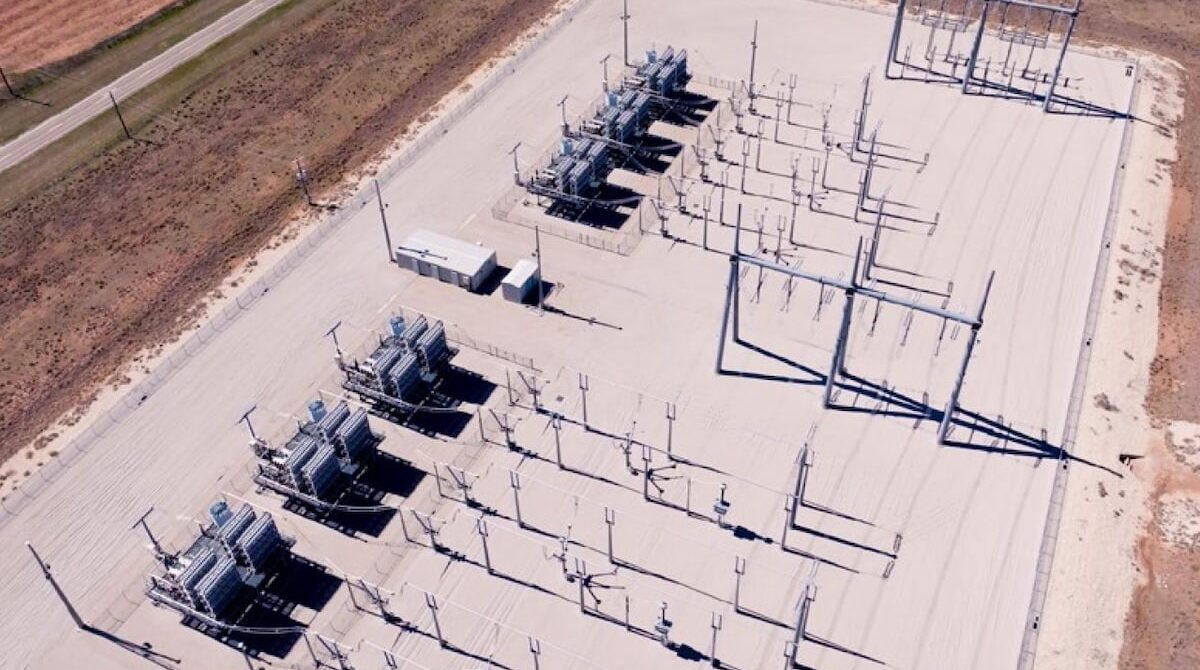
The company reiterated its acquisition of 200 acres of land near its existing 563 MW Rockdale facility in Texas, a transaction announced in September.
The additional land provides greater control over future development adjacent to an established large-load electrical interconnection.
Bitdeer believes the site's transmission infrastructure could support further power allocations, although those additional allocations remain prospective.
In Norway, the company continues to advance its previously announced 16-year AI/HPC colocation agreement with Volta at the Tydal campus.
The agreement covers approximately 121 MW of critical IT capacity and carries an estimated $4.7 billion in contractual value over the initial term. That figure could increase to approximately $8 billion if the tenant exercises an eight-year extension.
The colocation agreement is distinct from Bitdeer's $2.9 billion AI Cloud backlog. The former involves providing data center infrastructure to a tenant, while the latter relates to the company's GPU cloud services.
Both businesses require substantial infrastructure investment, and the expected contract values should not be confused with revenue already recognized.
Execution Becomes the Next Test
Bitdeer's September update provides evidence of substantial growth across both its established mining business and its emerging AI infrastructure portfolio.
Bitcoin production is now three times its year-earlier level, while the AI Cloud business has expanded its multiyear backlog through customer agreements for facilities expected to enter service in 2027.
Yet its existing GPU deployments and annualized revenue run rate were essentially unchanged during September.
That makes the coming quarters important for assessing whether the company's AI infrastructure expansion can translate into recurring operating revenue, particularly as large-scale GPU deployments require considerable upfront investment.
TheEnergyMag previously reported that Bitdeer's second-quarter revenue rose 47% to $228.8 million, although the company posted a $92.3 million net loss as electricity, depreciation and financing costs weighed on results.
The latest production update provides operating data but does not establish how those underlying costs or profitability changed during September.
Bitdeer also said it would shift detailed infrastructure reporting from monthly updates to quarterly disclosures alongside earnings releases, consolidating development updates with financial reporting.
For investors, the next tests will be the successful delivery of its contracted AI capacity, growth in active GPU cloud revenue and the economics of an increasingly large bitcoin mining fleet.