The early start provides Cipher with its first rental revenue from the data-center strategy. Its second-quarter results still reflected the legacy mining business: all $24.8 million of reported revenue came from Bitcoin mining, down 43% from $43.6 million a year earlier. Because rent at Black Pearl began after the June 30 quarter ended, the new revenue stream was not included in the period.
Cipher posted a net loss of $267.5 million, or 65 cents a share, compared with a loss of $45.8 million, or 12 cents, a year earlier. Adjusted earnings before interest, taxes, depreciation and amortization swung to a loss of $30 million from positive $32.3 million.
The GAAP loss included a $150.5 million negative change in the fair value of warrant liabilities. Interest expense climbed to $66.7 million from $1.1 million as Cipher took on project-level debt to finance its data-center construction program. Compensation and benefit costs rose to $42.4 million from $15.7 million.
Cipher also disclosed an option on a new site, called Apollo, within 25 miles of San Antonio. The approximately 288-acre property could accommodate as much as 900 megawatts and has been submitted as a studied load under the Electric Reliability Council of Texas’ revised interconnection process.
The option expands Cipher’s pipeline but does not represent committed or energized capacity. The company did not identify a tenant, give a development timetable or disclose the cost of exercising the option. Large data-center projects remain dependent on grid studies, interconnection approvals, financing and customer commitments.
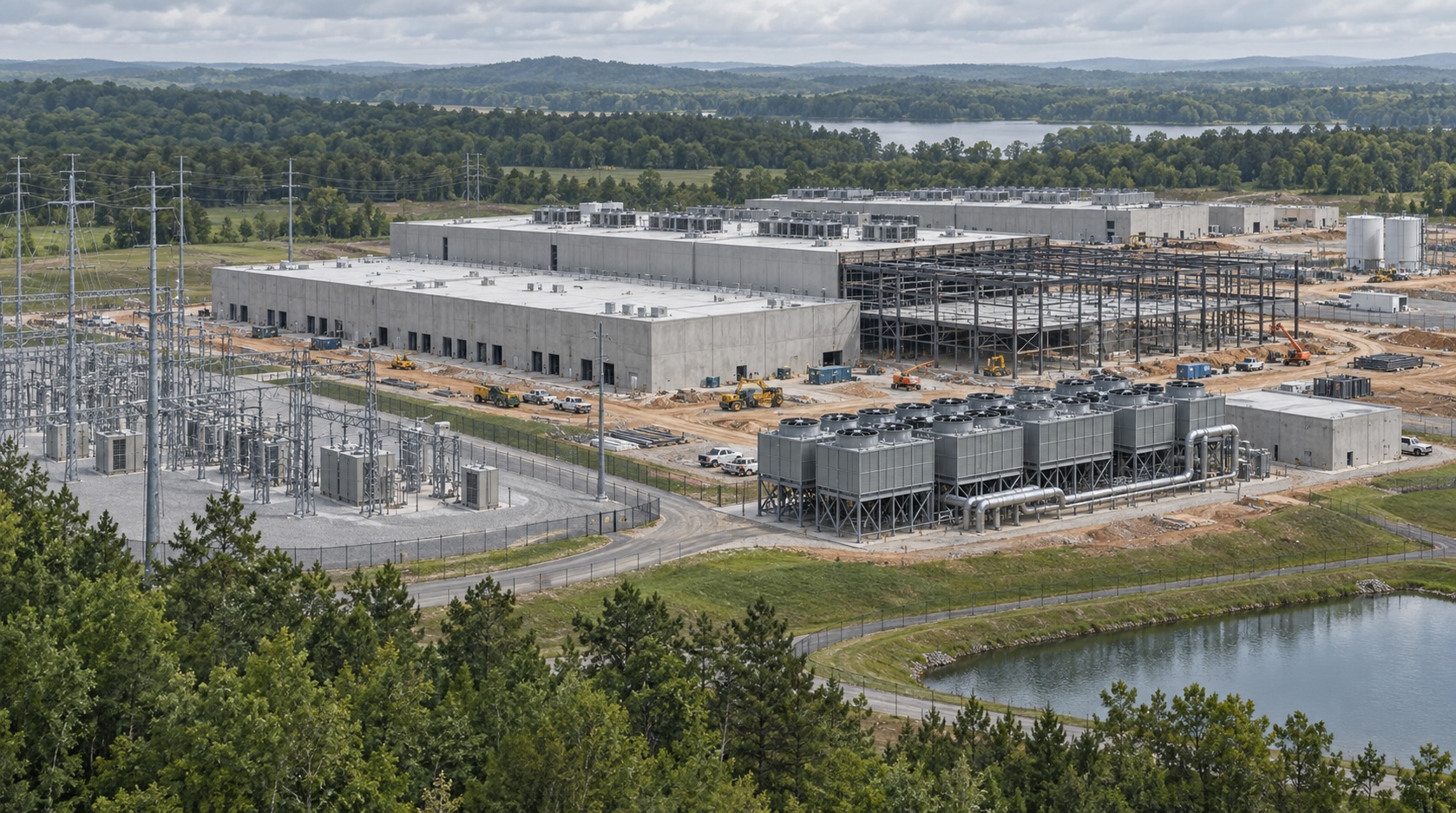
Construction is continuing at Black Pearl, with the remaining first-phase data halls undergoing mechanical, electrical and plumbing work. Foundations, structural steel and underground electrical work are progressing on the second phase, Cipher said.
At Barber Lake near Colorado City, Texas, tenant Fluidstack has begun beneficial use of part of the facility, including partial building occupancy and deployment of network racks. The 300-megawatt campus is leased to Fluidstack, with Google backing certain tenant obligations. Cipher previously targeted delivery of the first phase by September 30 and the second by January 31, 2027, according to its annual report.
The company also completed financing for its Stingray development in Andrews, Texas. Cipher’s subsidiary sold $810 million of 6% senior secured notes due in 2031 in June, with the proceeds earmarked for construction, reserves and reimbursement of earlier company-funded spending. The latest release said the transaction reimbursed Cipher for $56.7 million of project expenditures. SEC documents show the notes are secured at the project level.
Stingray is designed to provide 70 megawatts of critical IT capacity under a lease with AWS. Earthwork, grading, pad preparation and underground electrical installation are underway, with construction proceeding on schedule, Cipher said.
The buildout has substantially expanded the company’s balance sheet. Cipher reported $831.8 million of cash and cash equivalents at June 30, along with about $3.73 billion of restricted cash. Long-term borrowings increased to $5.45 billion from $2.71 billion at the end of 2025.
Cipher changed its name from Cipher Mining to Cipher Digital in February to reflect its transition toward leased AI and HPC infrastructure. The Black Pearl rent commencement is the clearest operational milestone yet in that transition, while the second-quarter figures underscore the financing costs and earnings volatility accompanying the buildout.