ENGIE’s North America Chief Says AI Boom Needn’t Raise Power Bills
Key Takeaways
- ENGIE’s North America chief argues AI data centers needn’t raise other customers’ power bills if new generation keeps pace and developers pay for required infrastructure
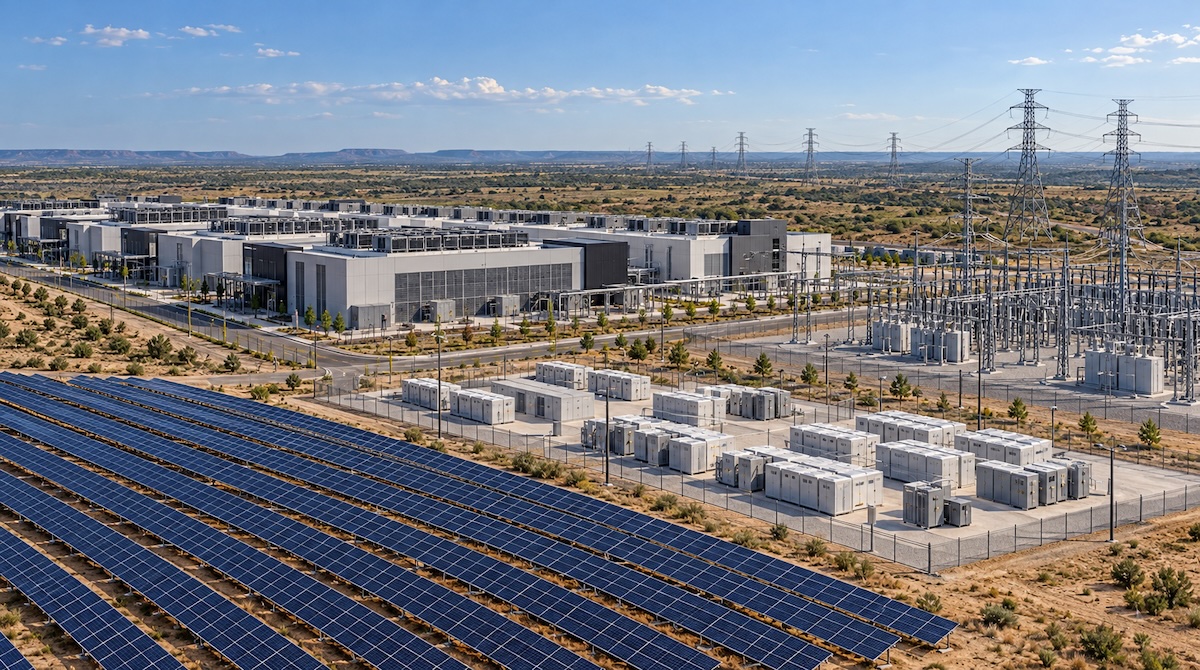
- Data centers are seeking powered land and dedicated generation, prompting ENGIE to adapt renewable projects while retaining grid connections and contractual protections if customers’ plans fall through.
The AI data center boom does not have to mean higher electricity bills for other customers, according to ENGIE’s interim North America chief, who argues that new generation and charging developers for the infrastructure they require can help contain the impact.
Anne-Laure Chassanite, who also leads ENGIE Resources, challenged the assumption that rising data-center demand inevitably translates into higher costs for households and businesses. In an interview with TheEnergyMag, she pointed to Texas as a market where additions of solar and battery storage have helped accommodate growth.
“I think this is a misrepresentation right now,” she said when asked whether data centers were putting price pressure on other business customers. “These data centers are kind of contributing to investments that in the end might be beneficial to everyone.”
Her argument rests on both the availability of electricity and who pays to deliver it. Developers should bear identifiable costs associated with connecting their facilities and reinforcing the grid, she said, while investment in additional generation can help serve growing demand.

ENGIE has a commercial stake in that outcome. Its North American operations include renewable generation and storage, while ENGIE Resources sells power to business customers. Chassanite holds leadership roles across both businesses, giving her a view of the investment decisions behind new supply and the contracts signed by its buyers.
The company is already supplying the sector through conventional renewable-energy agreements. In August, ENGIE announced a 48-megawatt solar power purchase agreement with QTS for its data-center operations in Irving, Texas, backed by a separate agreement to procure generation from ABEI Energy’s Lubio Solar project.
Chassanite’s assessment of prices differs sharply by region. She described Texas as better positioned to accommodate new demand than PJM, the grid serving parts of the eastern and central United States, where she said plant retirements and insufficient replacement generation had left supply tighter.
Across ENGIE’s business customer portfolios, the average energy price in the ERCOT market covering most of Texas was about half that in PJM, she said.
That comparison reflects ENGIE’s mix of customers and contracts rather than an equivalent household bill in each region. It also does not show how prices have changed over time or isolate the effect of data centers. Chassanite did not provide a breakdown of the portfolios or their contract periods during the interview.
There is evidence that data-center demand has increased costs in PJM. In a June 24 report, independent market monitor Monitoring Analytics attributed about $9.3 billion, or 74.7%, of the increase in capacity-market revenues in PJM’s 2025/2026 auction to data-center load. Capacity payments compensate resources for being available to meet demand; they are distinct from the price of electricity generated and from the full retail bill.
The findings underscore the limits of treating the AI buildout as a single national power-market story. Paying for a facility’s connection does not alone resolve the separate question of how additional demand affects prices across the wider market.
For Chassanite, the ability to build supply is central to the difference between regions. She said solar additions had eased pressure during Texas’s daytime air-conditioning peaks, with batteries helping cover hours when solar output falls away.
New gas-fired generation faces a slower path. Turbine availability and permitting mean a thermal plant can take five to seven years to build from scratch, she said. Renewable projects face added complexity from tariffs and changing rules, but ENGIE can still source equipment for solar, wind and batteries.
“We can still find supply and build,” she said.
The scramble for electricity is also changing what customers ask ENGIE to provide. As easy-to-connect sites become harder to find around places such as Dallas, customers are looking farther into rural areas. And ENGIE is increasingly fielding requests to adapt its renewable-energy projects to serve specific data-center customers seeking "powered land," Chassanite said.
“Now there is not one single project that we have where we’ve not had a request and we’re not studying this,” she said, referring to those customer-specific development arrangements.
The opportunity comes with uncertainty over how much of the announced demand will arrive. Data centers can be developed and equipped in phases, and ENGIE discounts announced plans when preparing its forecasts, she said.
“There is always a gap between what they announce and what they finally do,” Chassanite said.
To manage that exposure, ENGIE seeks contractual conditions that limit its commitment if the customer does not proceed. Its broader business also provides potential alternative buyers: if a data center development falls through, generation could serve other commercial customers, provided ENGIE can secure a grid connection.
That connection remains important even when power is developed for a specific facility. Chassanite said ENGIE generally uses solar and batteries for the arrangements she described, with the grid supplying electricity during shortfalls and taking surplus output at other times.
“Of course, it has to be interconnected because you might have some hours where you need to have additional grid power,” she said.
Her approach is to advance the generation and customer projects together while retaining options if one side’s plans change.
“So we try to move forward in parallel with protections on both sides,” Chassanite said. “And then we repurpose the whole facility if needed.”