OpenAI Plans ‘Compute Campus’ Rebrand as Data Center Opposition Grows
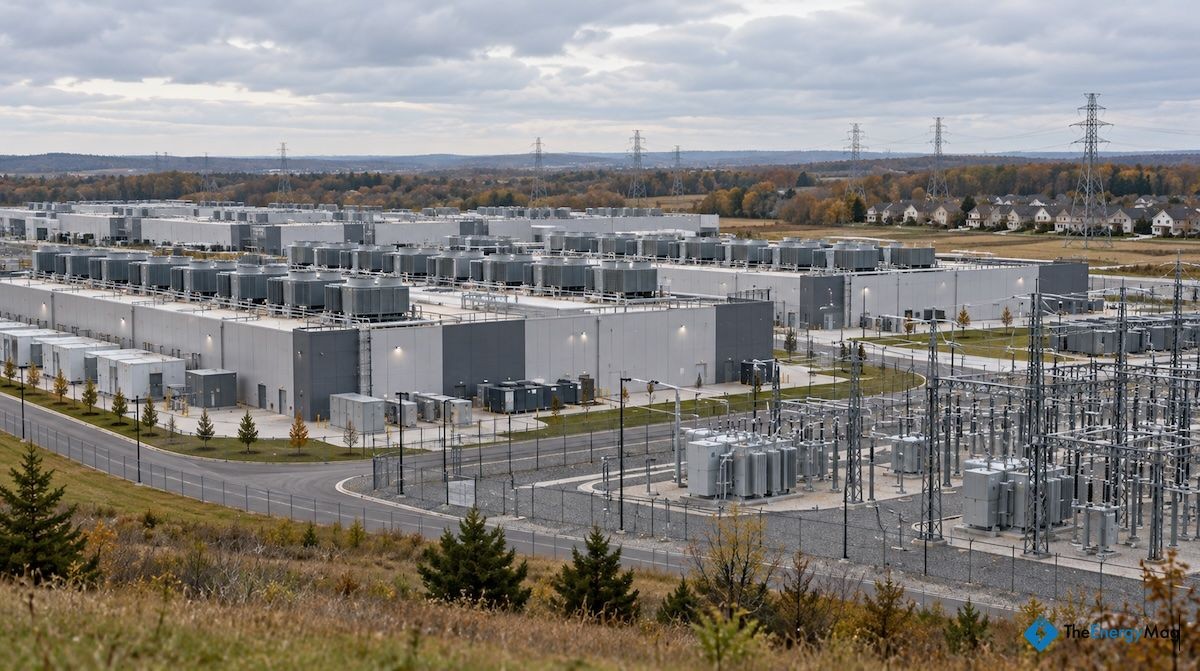
AI-generated image: synthetic visual, not an actual depiction of events, people, or locations.
OpenAI plans to promote its AI data centers as “compute campuses,” part of a broader policy campaign as public concern over electricity costs and local impacts complicates the industry’s infrastructure expansion.
A company spokesperson confirmed the proposed terminology to Business Insider on Sunday, saying it better reflects investments that combine computing, energy infrastructure and skilled employment. The spokesperson said host communities should help shape the projects and share in their opportunities.
The effort comes ahead of the Nov. 3 U.S. midterm elections and a planned post-election policy push. In an interview with Axios, OpenAI Chief Global Affairs Officer Chris Lehane said that the company also intends to promote mandatory safeguards for powerful AI systems, economic opportunity and international cooperation on regulation.
The infrastructure campaign seeks to emphasize the benefits of hosting facilities whose power demand, water use and effects on nearby residents have become political issues. Lehane told Axios that communities should hold developers accountable for delivering benefits.

Public opinion has become less favorable as awareness of data centers has grown. A Pew Research Center survey published in September found that 54% of U.S. adults considered the facilities mostly bad for the environment, up from 39% in January. Half considered them mostly bad for household energy costs, compared with 38% earlier in the year.
The survey, conducted July 20 through Aug. 9 among 10,548 adults, also found that 49% viewed data centers as mostly bad for nearby residents’ quality of life, up from 30% in January. Negative views increased among both Republicans and Democrats.
OpenAI has already attached community and utility commitments to some of its largest proposed projects.
In Effingham County, Georgia, the company said in July that it was contracting with Georgia Power for 3.2 gigawatts of electricity, to be delivered in phases between 2028 and 2032, for its planned Project Camellia development.
OpenAI said it would cover the infrastructure and electric-service costs required for the project and that those costs could not be passed to existing ratepayers under state regulatory rules. It also committed $80 million in community benefits over the project’s life and annual public audits by an independent firm.
The Georgia plan includes reducing electricity consumption during periods of high demand before residential customers are affected. Axios reported Monday that OpenAI intends to extend such commitments through a “Grid Protectors Program” for U.S. campuses it directly develops, cutting power use when extreme weather or other emergencies strain the grid. The proposed national initiative would build on the Georgia commitments.
The company’s Ohio expansion illustrates the scale of infrastructure behind its community-benefit argument. In August, OpenAI announced an agreement for approximately 8 gigawatts of information-technology capacity at the PORTS-Pike Technology Campus in Pike County, working with SB Energy, Nvidia and the U.S. Department of Energy.
OpenAI said the project was expected to create 35,000 construction jobs during a six-year buildout through 2032 and 2,500 long-term operating jobs. It pledged $40 million for a community grant fund, in addition to SB Energy’s separate $40 million commitment.
Those figures describe a planned development. OpenAI said the first 800 megawatts were expected to become available in 2028, while later phases would require new power plants, transmission lines and other infrastructure. SB Energy is to build, own and operate the facility under a 20-year lease to OpenAI, with development dependent on permits, environmental reviews, financing and infrastructure.