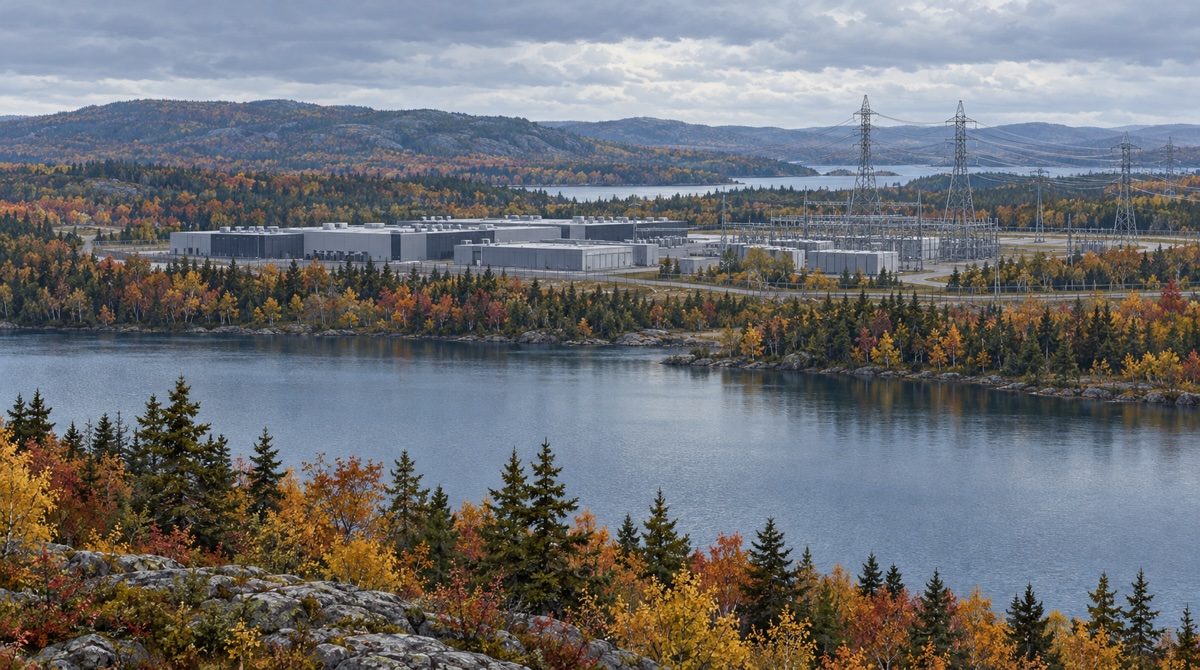
Google Details $17B Wyoming Data Center Plan as AI Stocks Sell Off
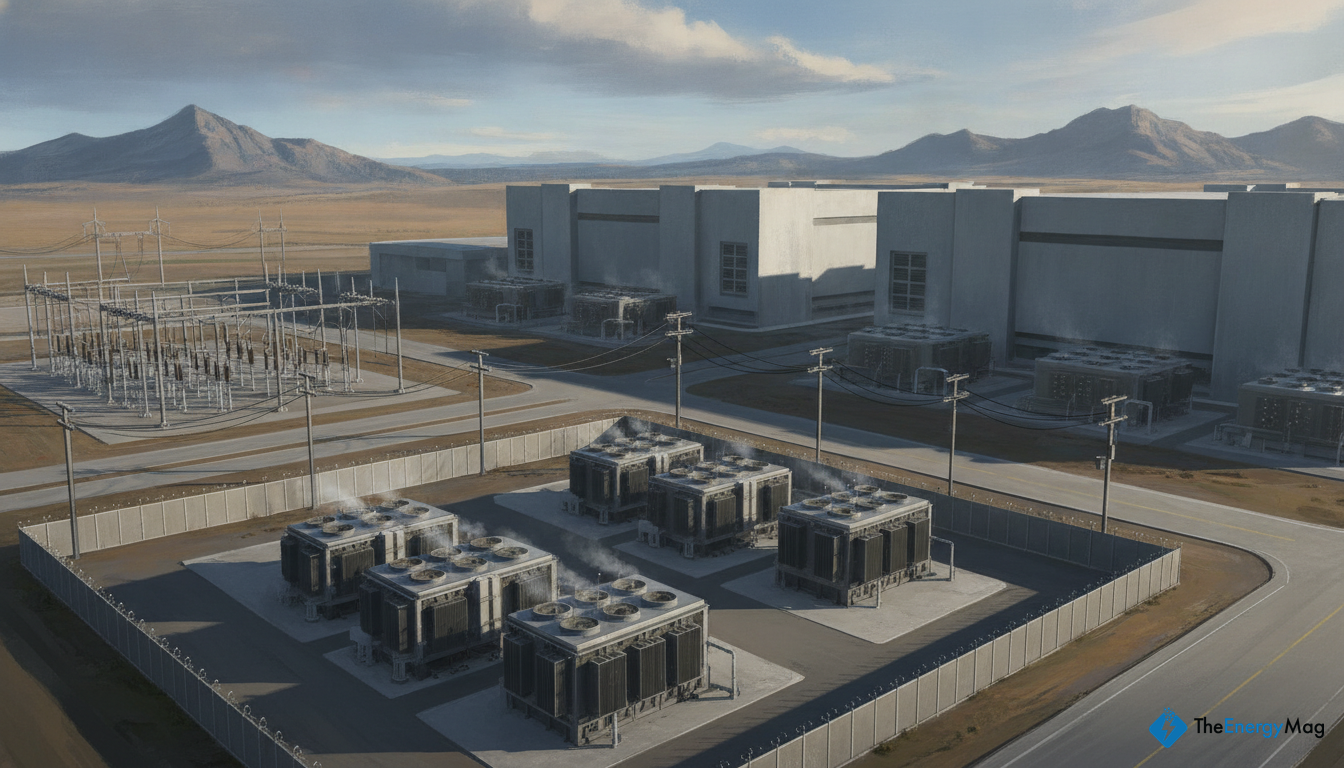
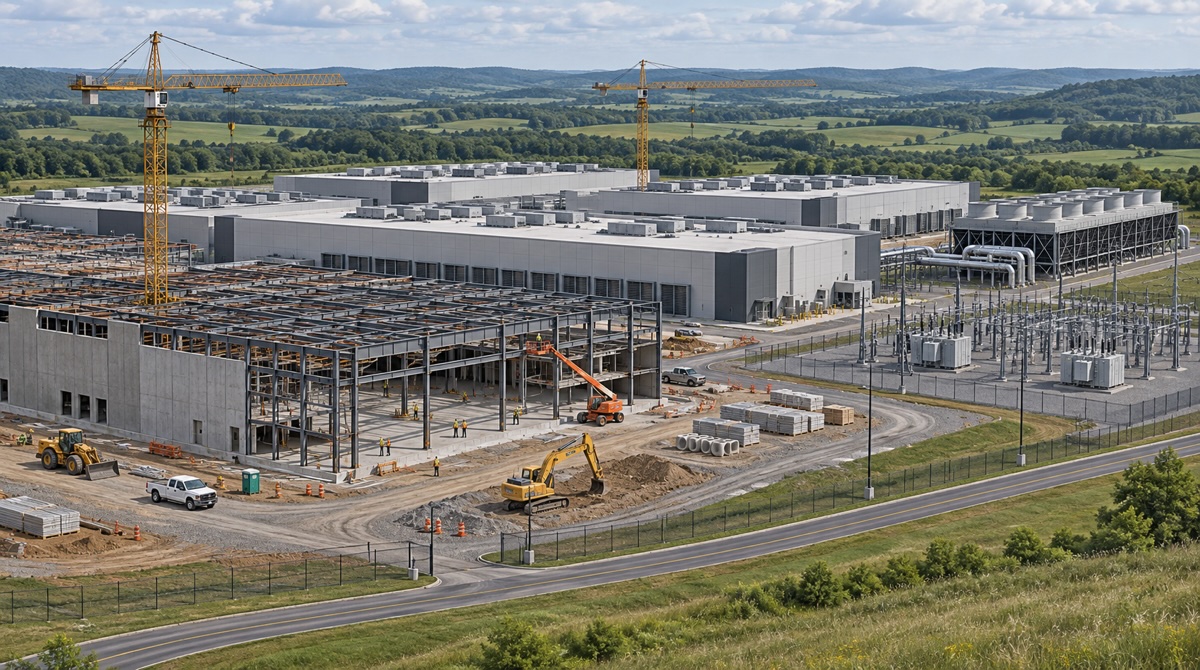
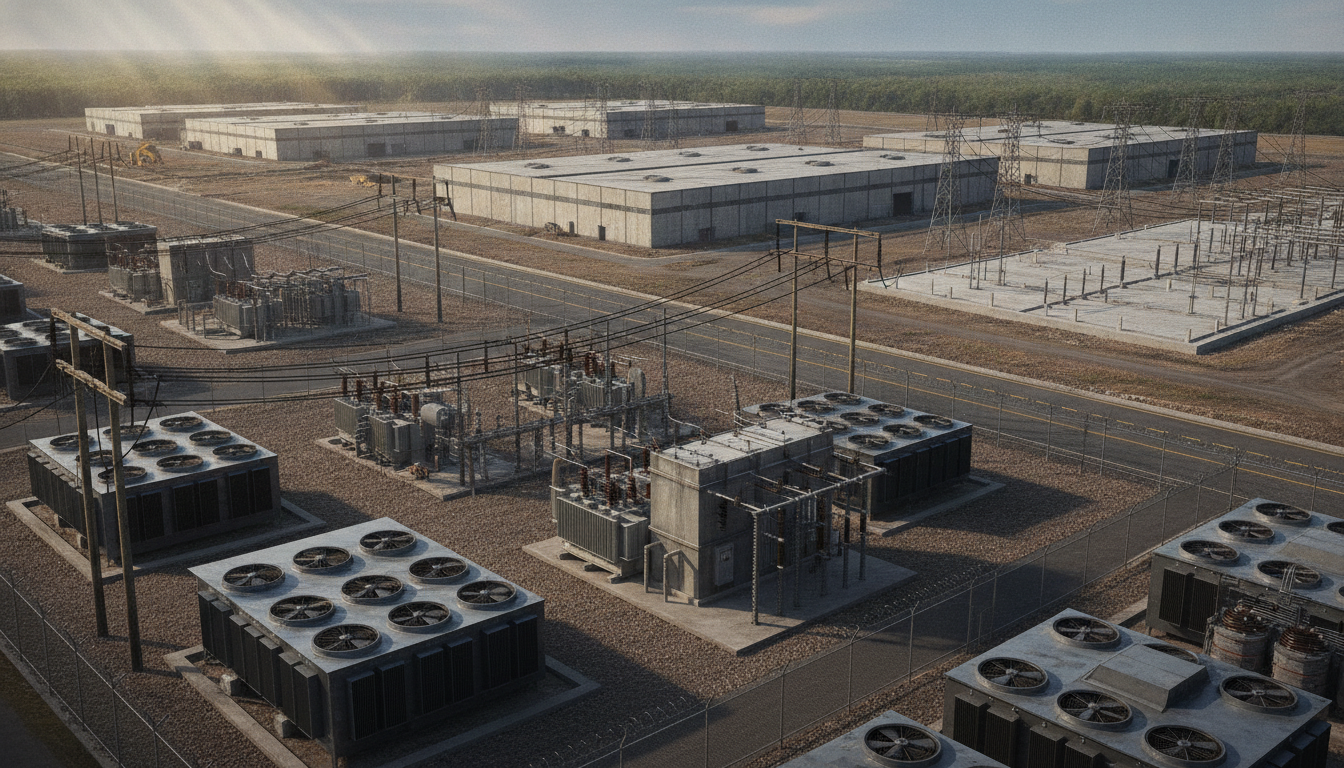
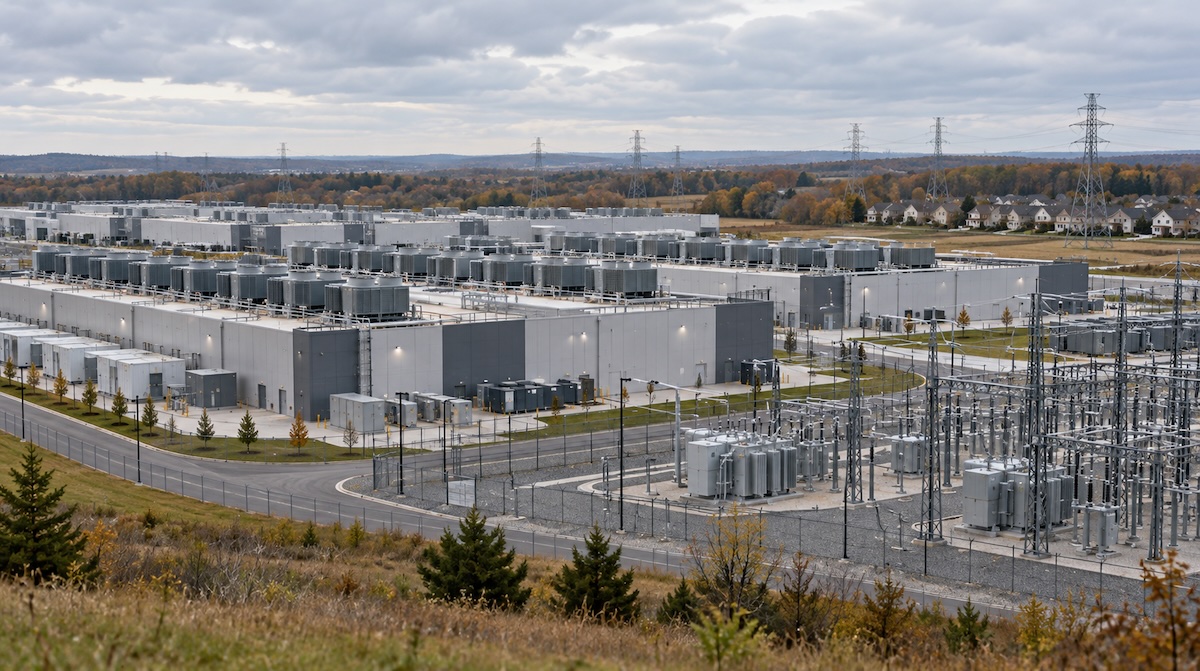
AI-generated image: synthetic visual, not an actual depiction of events, people, or locations.
Google parent Alphabet (NASDAQ: GOOGL) has outlined a $17 billion investment in its first Wyoming data center, detailing a power strategy built around natural gas generation, fuel cells and carbon capture technology as investors retreat from AI infrastructure stocks amid concerns about spending and development risks.
The company said Thursday that the planned campus near Cheyenne will be developed in partnership with Tallgrass Energy, Black Hills Energy, American Electric Power and Related Digital.
At the center of the project's electricity supply is a planned 702-megawatt fuel-cell installation using technology manufactured by Bloom Energy (NYSE: BE). The development is backed by a 20-year power purchase agreement with American Electric Power (NASDAQ: AEP) and is designed to incorporate carbon capture and storage.
Google will also source electricity from natural gas generators operated by Tallgrass Energy and Black Hills Energy (NYSE: BKH).

The announcement comes during a sharp selloff in technology and AI-linked stocks on Thursday. The Nasdaq Composite fell roughly 5% in early afternoon trading as investors reassessed the economics of large-scale AI investment and the prospect of tighter scrutiny of data center development following this week's U.S. midterm elections.
The juxtaposition highlights a growing tension in the AI infrastructure market: hyperscalers continue to commit billions of dollars to long-term computing and electricity projects, even as public-market investors question the cost, financing and pace of the buildout.
702 MW Fuel-Cell Project Anchors Power Strategy
Google's Wyoming development will incorporate one of the largest planned fuel-cell power installations, with Bloom Energy supplying systems that convert natural gas into electricity through an electrochemical process rather than conventional combustion.
The project was previously disclosed by American Electric Power on October 14, when the utility announced plans to invest approximately $4 billion in the 702 MW installation.
The 20-year power purchase agreement is with Cheyenne Fuel Cell, a development entity approximately 92% owned by AEP, with the remaining interest held by funds advised by Basalt Infrastructure Partners.
Construction is expected to begin in 2026, with the installation targeted to become fully operational by the end of 2028.
The fuel-cell development is also designed to integrate carbon capture and storage, with captured carbon dioxide transported for permanent geological sequestration at Tallgrass Energy's nearby Eastern Wyoming Sequestration Hub.
Google said the technology is intended to capture and store a large majority of the project's carbon dioxide emissions.
However, the company did not disclose an expected capture percentage, final carbon intensity or detailed commercial operating arrangements for the carbon capture system.
The distinction is important. Although Bloom's fuel cells generate electricity without burning natural gas, their operation on fossil fuels still produces carbon dioxide. The project's emissions performance will therefore depend on the successful deployment and operation of the planned capture and storage infrastructure.
Google said the addition brings its total contracted U.S. carbon-capture-backed power capacity to nearly 1 GW, including a previously announced project in Illinois.
Black Hills Plans $1.8 Billion in Gas Generation
The Wyoming campus will also rely on a broader electricity arrangement with Black Hills Energy.
As TheEnergyMag previously reported, Black Hills announced definitive agreements on October 6 to support Google's planned Cheyenne development.
Under those agreements, Black Hills intends to invest approximately $1.8 billion in 564 MW of new natural gas generation at its existing Cheyenne Prairie Generating Station.
The utility will provide up to 590 MW of grid-connected electricity service and manage approximately 2.1 GW of third-party contracted energy resources through a privately managed microgrid.
The combined resource portfolio totals approximately 2.7 GW, including reserve margins.
That figure should not be interpreted as the data center's disclosed critical IT load. It represents an electricity resource mix that includes generation and reliability reserves, and the individual supply components should not simply be added together without accounting for their contractual relationships.
Black Hills expects electricity service to begin in late 2027 and ramp toward peak project demand in 2030.
The utility's agreements with Google run through 2048 and are expected to generate approximately $150 million in annual net income for Black Hills by 2030.
Google has already provided $399 million in refundable advances for long-lead-time equipment procurement.
The planned Black Hills generation investment and AEP's fuel-cell development are separate infrastructure commitments supporting the broader campus. Their announced investment amounts should not automatically be treated as additional spending on top of Google's stated $17 billion Wyoming investment.
Can Data Centers Pay Their Own Power Costs?
A central component of Google's announcement is its commitment to cover the electricity and supporting infrastructure costs associated with the project.
The company said it would pay for all electricity it consumes and cover infrastructure needs directly attributable to its development.
Black Hills has separately said its agreements are structured to protect existing utility customers from having to subsidize the new data center.
Those protections include contractual provisions addressing capital cost recovery, early termination, credit support and other financial risks.
The structure addresses one of the most contentious questions surrounding the U.S. data center boom: whether utilities and their existing customers will ultimately bear the costs of new generation and transmission infrastructure built to serve large technology companies.
As TheEnergyMag examined in its recent electricity-cost explainer series, the financial impact of large power users depends not simply on how much electricity they consume, but on how new infrastructure is financed and how costs are allocated.
Long-term customer agreements can reduce the risk of stranded infrastructure investments if demand fails to materialize.
However, contractual protections do not eliminate construction, permitting or execution risks, and their effectiveness depends on the terms and enforcement of the arrangements.
Carbon Capture and Water Use Face Scrutiny
Google is also evaluating additional carbon capture applications beyond the Bloom fuel-cell development.
The company said it is conducting a front-end engineering and design study to assess whether Tallgrass's combined-cycle natural gas turbines could be equipped with carbon capture technology.
Such a study is an early engineering assessment rather than a final investment decision or proof that the technology will be installed.
Google also said its Wyoming data center will use air cooling to limit pressure on local water resources.
The choice is particularly relevant in Wyoming, where large industrial developments face scrutiny over water availability and environmental impacts.
Air cooling can reduce water consumption compared with evaporative cooling systems, although the eventual electricity and water requirements will depend on the facility's final design and operating conditions.
Google's broader investment strategy includes working with local stakeholders on development impacts.
The company said it recently met with more than 200 residents in Laramie County and plans to establish a Community Council with its energy and infrastructure partners.
Google also projects that the development will generate hundreds of millions of dollars in local property taxes over time, although it did not specify the calculation period in Thursday's announcement.
$17 Billion Commitment Meets a Shifting Market
Google's detailed announcement arrives at a challenging moment for publicly traded companies tied to the AI infrastructure expansion.
Technology and data center stocks fell sharply Thursday, with investors increasingly concerned that massive capital commitments could take longer than expected to produce adequate financial returns.
The selloff also reflects uncertainty about future data center permitting and development policies following the U.S. midterm elections, as local opposition to large computing facilities becomes an increasingly important constraint.
Reuters reported that the Nasdaq Composite was on track to enter correction territory, while chipmakers and AI infrastructure companies suffered particularly steep declines.
That market backdrop makes Google's Wyoming investment especially notable.
The company is advancing a long-duration infrastructure strategy supported by dedicated electricity contracts, utility investment and emerging power technologies at a time when equity markets are becoming more skeptical of the sector's spending requirements.
The Wyoming development also illustrates the increasingly direct relationship between data center construction and energy infrastructure investment.
Rather than relying solely on existing grid capacity, Google is helping support new generation, pursuing carbon capture and coordinating electricity delivery with multiple utility and infrastructure partners.
Still, important execution questions remain.
The 702 MW fuel-cell development is not yet operational, the carbon capture systems have yet to demonstrate commercial performance at the proposed scale, and additional generation and transmission projects must be delivered over several years.
Google has not provided a detailed construction timetable for the entire data center campus or disclosed how the $17 billion investment will be allocated across individual phases.
For the broader industry, the project offers a prominent example of how hyperscalers are attempting to secure large blocks of electricity while addressing grid capacity, environmental and community concerns.
Whether these arrangements deliver on their promises will depend on converting contracted power projects into operational infrastructure, managing development costs and ensuring that the burden of expansion does not fall on existing electricity customers.