Velaura AI Raises $110M After Auradine Rebrand, Bitcoin Miner Pivot
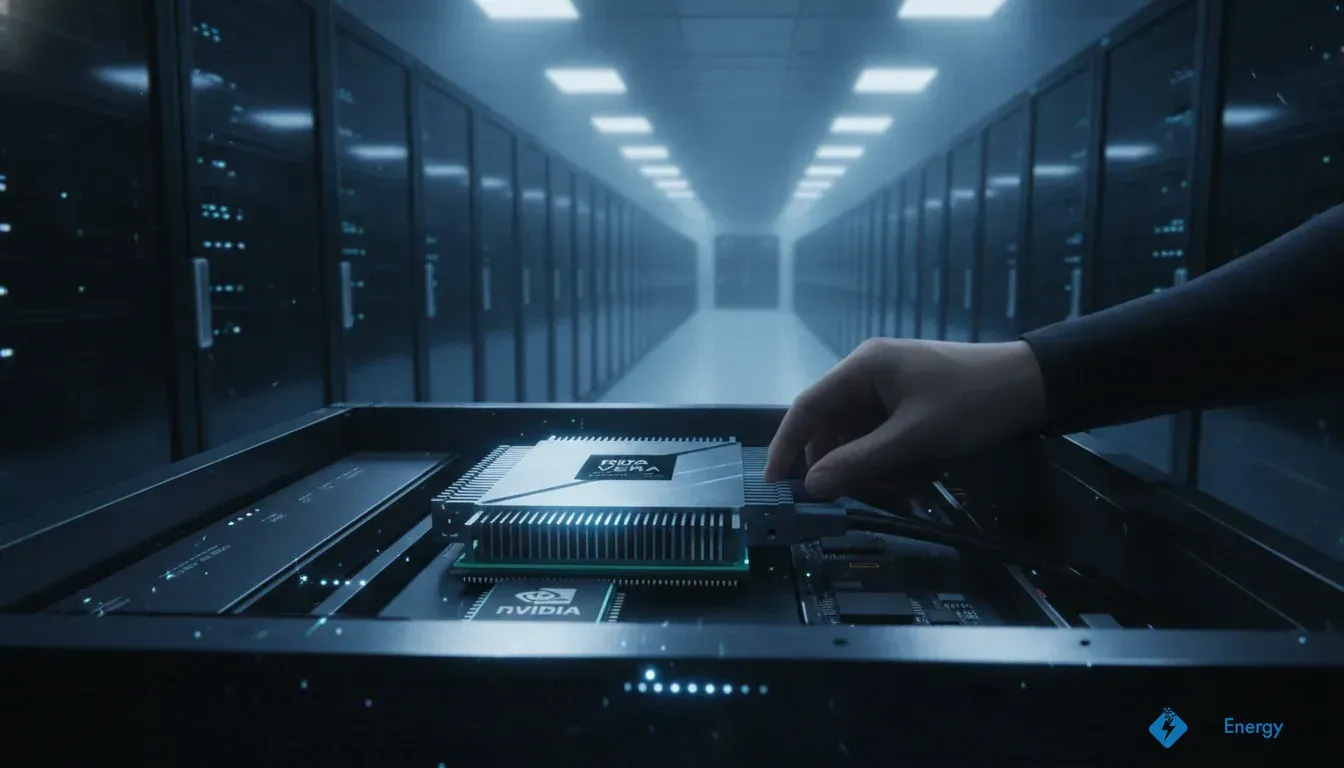
AI-generated image: synthetic visual, not an actual depiction of events, people, or locations.
Velaura AI has raised $110 million in fresh financing at a valuation of more than $1 billion, giving the semiconductor startup additional capital to shift its focus from Teraflux bitcoin miners toward energy-efficient chips for data centers, robotics and other AI systems.
Seligman Ventures led the Series A round, with new investor Capricorn Investment Group joining existing backers Mayfield, Maverick Silicon, MARA (NASDAQ: MARA) Holdings, Premji Invest, Samsung Catalyst Fund and StepStone Group, the Santa Clara, California-based company said on Tuesday.
Velaura plans to use the proceeds to develop and commercialize its AI-computing portfolio, including its Titan Core silicon-design platform, and to expand its engineering and customer-facing teams. The closely held company didn’t disclose revenue, the financing’s precise ownership terms or the identities of the hyperscalers it says it is working with.
The round’s label marks an unusual reset in the company’s financing history. Velaura, previously known as Auradine, raised an $81 million Series A in 2023 and an $80 million Series B in 2024. It then secured $153 million in a Series C in April 2025, bringing its capital at the time to more than $300 million. That Series C included $138 million of equity and $15 million of venture debt, according to Chief Executive Officer Rajiv Khemani.

Including the new round, Auradine and Velaura have announced at least $424 million of financing. The company didn’t explain why the latest investment is being called a Series A after the earlier Series A, B and C rounds. It is the first announced financing since the Velaura rebrand and the shift to an AI-centered strategy.
Auradine was founded in 2022 and initially built its business around Teraflux bitcoin miners, seeking to challenge an equipment market dominated by Asian manufacturers including Bitmain and MicroBT. Its portfolio expanded to air-, hydro- and immersion-cooled systems powered by an internally designed 3-nanometer application-specific integrated circuit, or ASIC.
By April 2025, Auradine said its Teraflux equipment had been deployed by more than 40 bitcoin data center operators. A month later, it was still expanding the product line with ASIC sales, reference designs and modular mining containers.
That strategy changed direction in March 2026, when Auradine adopted the Velaura name and said it would apply its low-voltage chip expertise to cloud, edge and “physical AI,” a category that includes robots, drones and autonomous machines. It brought in Nuvia co-founder and former Apple and Google engineer Manu Gulati as chief development officer and named UCLA professor Aditya Grover as an adviser.